Part 3 of the TNEI Innovation series
Gruffudd Edwards, Principal Consultant
Turning network data into actionable insight
In part 2 of the TNEI Innovation series, we explored how future offshore networks could support system stability and resilience on the transmission network.
In part 3, Gruffudd Edwards (Principal Consultant) turns attention to the low-voltage (LV) network, where increasing electrification is presenting some challenges, including voltages that are occasionally higher than statutory limits, lower than them, or in some cases both higher and lower at different times.
The impact of voltage fluctuations
Low voltage
Low voltages can occur because the presence of EV chargers and heat pumps can create loads on LV networks that are significantly larger, and more closely matched in their timing, than was envisioned when the distribution networks were designed.
The consequences of low voltages that customers tend to notice include:
- Lights dimming or flickering
- Heat pumps or electric heaters underperforming
- Refrigeration compressors struggling or even tripping
- Routers and other electronics rebooting
- Longer kettle and cooking times
High voltage
Excessively high voltages can occur when a large amount of solar photovoltaic (PV) is present in an LV network, drastically reducing or even reversing the expected flow of power. Networks can be particularly exposed to this risk in the middle of a warm and sunny day, where the solar generation is near its maximum value and domestic demand is particularly low.
The voltage problems experienced on an LV network can be particularly severe if the PV generation is clustered near the transformer and/or the large demands from low carbon technologies are at the farthest extreme of the network, particularly in less densely populated areas.
High voltages can also lead to electronic devices tripping, as well as damaging some electrical devices eg with motors or pumps. It can also lead to solar PV tripping or EV chargers tripping. When EV chargers trip, this generally causes the voltage to rise further which can cause a cascading effect of tripping EVs and other devices.
While the rules about how tightly Distribution Network Operators (DNOs) must manage the voltages experienced by customers are clear, several fundamental questions relating to voltage management remain open that the industry and its regulators are yet to completely settle. Some of these include:
- How can we best characterise and quantify the degree to which the voltages on a particular LV network are being managed successfully, which exceedances consistently avoided?
- How can we best identify the LV networks that require the most urgent action, or classify a large collection of networks by the urgency with which action is needed?
- How can we best identify the LV networks that are not experiencing any serious voltage management issues at present, but are at elevated risk of experiencing them if current trends continue.
- How can we identify whether remedial actions such as changing the voltage settings of secondary or primary transformers would alleviate more problems than they worsen?
- How can we analyse and describe the condition of a large portfolio of LV network, in terms of the severity of voltage exceedance issues, in a fair and consistent way – that facilitates sound decision-making around justified levels of expenditure by DNOs on alleviating present and future voltage problems?
- How can DNOs answer these questions given the data it has available in a way that is acceptably simple, robust and reproducible among all DNOs?
Through the Voltmetric project, TNEI is helping explore these vital and interesting questions.
What is Voltmetric?
Voltmetric is an innovation project being delivered by Scottish and Southern Electricity Networks (SSEN) that is investigating exactly how voltage monitoring data, mainly domestic customers’ smart meter data, can be used to address the questions above, primarily through the concept of a Voltage Index. The aim is to translate the vast quantities of smart meter data that is now available to DNOs into concise, actionable insights and to achieve this by defining and calculating voltage indices in the most sensible way.
The emerging methodology is centred around the idea that there are 3 independent dimensions that are required to describe a voltage exceedance problem on a network:
- The severity of the exceedances
- The frequency with which they are occurring at each level of severity
- Prevalence across the network
This helps build a more complete picture of network performance by identifying both how significant voltage issues are and how many customers are affected by them.
This will help provide a clearer picture of conditions across the electricity network, helping network operators identify emerging issues and make better decisions about future investment and operational strategies.
Figure 1 illustrates how the voltage index combines the severity, frequency and prevalence of voltage issues to help identify where interventions may be urgently required.
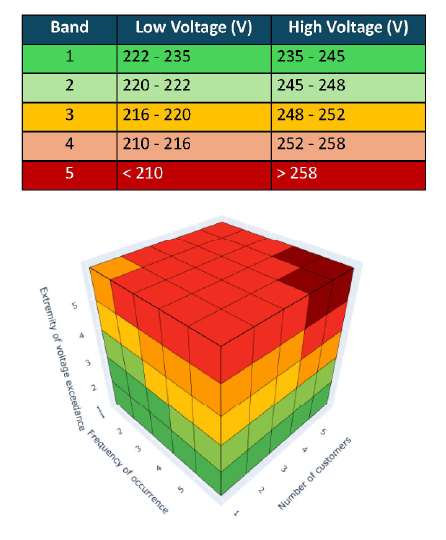
Figure 1: Conceptual framework for the Voltmetric Voltage Index, combining the severity, frequency and prevalence of voltage issues to support network assessment and investment decisions
Why does this matter?
As the energy transition accelerates, electricity networks are undergoing significant change. The growing adoption of electric vehicles and other low-carbon technologies is increasing the complexity of voltage management across distribution networks. As electricity demand patterns evolve, network operators need greater visibility of voltage and power quality issues to ensure customers continue to receive a reliable supply and emerging constraints can be managed efficiently.
Historically, voltage management has focused primarily on maintaining statutory voltage limits and ensuring reliable network operation. Today, network operators need a much deeper understanding of how voltage behaves across their systems, where constraints are emerging and how future demands may affect network performance.
Understanding the scale of an issue is only part of the challenge. Network operators also need visibility of how frequently voltage issues occur and how widely they are experienced across the network to prioritise investment and intervention effectively. And crucially, they need to be able to convey this to a wide range of audiences, from engineers to regulators.
Industry attention on voltage management is also increasing as Distribution System Operators (DSOs) prepare for electricity distribution price control 3 (ED3). Improved monitoring, enhanced visibility and data-driven network management are becoming central to delivering a reliable and cost-effective energy transition.
Projects such as Voltmetric are helping to build the evidence, tools and methodologies needed to support this shift.
Supporting the future energy system
Voltmetric sits at the intersection of several key themes that are shaping the future of electricity networks, including:
- Smart meter and network data analytics
- Voltage management and power quality assessment
- Low-voltage network visibility
- Strategic network investment planning
- Data-driven network operation and planning
- Supporting the energy transition through improved system insight
By improving the understanding of voltage, and power quality issues more broadly, projects such as Voltmetric can help network operators target investment more effectively, improve customer outcomes and support the efficient transition to a low-carbon energy system.
In the longer term, methodologies such as the Voltage and Power Quality Index could help provide a more consistent framework for assessing network performance and identifying where intervention is most needed.
How can we help?
TNEI has extensive experience in network analytics, and in using data sources such as smart meters to develop sophisticated bespoke models and algorithms that are increasingly essential to electricity network management and planning.
Through projects such as Voltmetric, our specialists are helping network operators unlock the value of increasingly large and complex datasets, and transforming information into practical insights that support better decision-making.
Whether you’re investigating voltage-related challenges, assessing power quality, evaluating low-voltage network performance or developing data-driven planning approaches, TNEI can support your project with analytical expertise and practical industry experience.
Get in touch to discuss how TNEI can support your next project