Part 2 of the TNEI Innovation series
Mohamed Galeela, Principal Consultant
Supporting system stability through offshore innovation
In the first article of the TNEI Innovation Series, we explored how the SIF BLADE project is investigating the role offshore wind could play in future electricity system restoration.
In Part 2, Mohamed Galeela, Principal Consultant at TNEI, examines how future offshore high voltage direct current (HVDC) networks could move beyond power transfer and actively contribute to system stability, resilience and restoration.
Through the UK-US collaborative project, Strategic Advancements in Offshore Multi-Terminal DC Networks (MTDC) for Enhanced System Services, TNEI is helping to investigate the technologies and control approaches that could support the next generation of offshore energy infrastructure.
What is the MTDC Project?
The MTDC project is a UK-US research collaboration (see Figure 1) investigating the technical requirements for future Multi-Terminal DC (MTDC) networks connecting offshore wind farms. TNEI and Cardiff University are leading the UK activities through the Innovate UK UK-US Offshore Wind Collaborative R&D competition, while the Electric Power Research Institute (EPRI) is delivering complementary work in the United States.
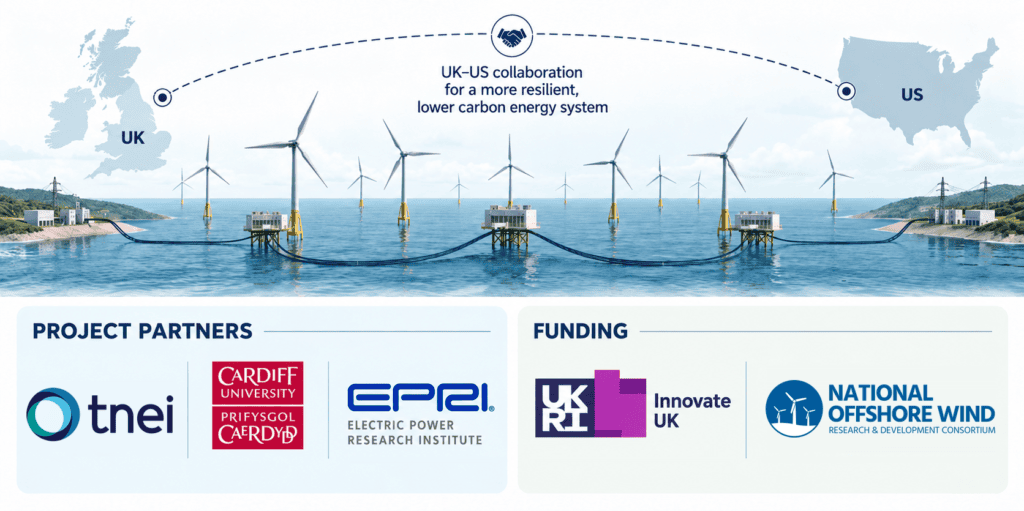
Figure 1: The project partners and funders involved in the MTDC project
Within the project, TNEI is leading the modelling activities, including the development of Grid Forming (GFM) and Grid Following (GFL) control approaches for HVDC converters and offshore wind farms. Cardiff University is supporting the work through hardware-in-the-loop validation.
Since the project began, TNEI has developed detailed electromagnetic transient models covering both point-to-point and multi-terminal HVDC configurations. These models provide a platform for investigating converter interactions, offshore wind integration and the provision of enhanced system services.
The work is focused on how coordinated Grid Forming control can enable MTDC-connected offshore wind farms to contribute to frequency support, voltage support, stable network operation and black start capabilities.
Why does this matter?
HVDC technology is expected to play an increasingly important role in connecting growing volumes of offshore wind generation to the onshore transmission network. As offshore infrastructure continues to develop, networks are likely to evolve beyond individual point-to-point links towards more interconnected offshore transmission systems.
At the same time, conventional synchronous generation is gradually being replaced by power-electronic converter-connected generation. This changes the way key system characteristics such as frequency, voltage and system strength are maintained.
As a result, future offshore HVDC infrastructure has the potential to do much more than simply transport renewable electricity.
Through the use of advanced Grid Forming controls, MTDC networks could enable offshore wind farms and HVDC converters to actively support the wider electricity system during both normal operation and major disturbances. Understanding how these controls interact, how services should be coordinated across multiple terminals and what technical limitations must be considered is therefore essential before these technologies can be deployed at scale.
What have we learned so far?
One of the key findings from the project is that an MTDC network cannot be viewed simply as a collection of independent HVDC connections. The behaviour of each terminal is influenced by the wider DC network, the connected AC systems and the control modes operating elsewhere within the system.
A major focus of the work has therefore been understanding how multiple Grid Forming terminals can be coordinated effectively. TNEI has investigated how participating terminals can collectively provide frequency support following a system disturbance, considering the available active-power margin at different locations and how the required response can be distributed across the wider network.
The studies have highlighted the importance of considering not only the amount of reserve available, but also how quickly and effectively individual terminals can contribute to the system response.
The project has also examined the interaction between Grid Forming and Grid Following terminals operating within the same MTDC network, helping identify the control and coordination requirements needed for stable multi-terminal operation.
Another significant area of research is black start and system restoration. Electromagnetic transient studies are being used to explore how Grid Forming offshore wind farms and HVDC converters could establish and energise a de-energised electrical network. This includes assessing converter energisation, DC-network charging, the formation of stable electrical islands and the restoration of wider network components.
These studies are helping identify the practical technical requirements that must be addressed if offshore wind and HVDC infrastructure are to contribute meaningfully to future restoration strategies.
Supporting the future energy system
The UK-US MTDC project brings together several areas that are becoming increasingly important as power systems become more converter dominated, including:
- Electromagnetic transient modelling of complex HVDC and offshore networks
- Grid Forming and Grid Following converter control
- Multi-terminal HVDC coordination
- Frequency and voltage support from converter-connected resources
- Black start and system restoration using offshore wind
- Offshore network energisation and converter interaction
- Hardware-in-the-loop validation of advanced control strategies
- Translating detailed technical studies into future network planning approaches
The work demonstrates how future offshore networks could evolve from passive transmission infrastructure into an active part of power system operation. Coordinated control across multiple HVDC terminals could allow geographically distributed offshore resources to provide services that have traditionally been delivered by conventional synchronous generation.
The collaboration between TNEI, Cardiff University and EPRI also helps connect detailed converter-level modelling with the wider planning and operational challenges that network operators will face as MTDC systems become increasingly important.
How can we help?
Through projects such as the UK-US MTDC collaboration, TNEI is helping industry understand how emerging technologies can be modelled, controlled and integrated into future power systems while maintaining security, stability and resilience.
Our specialists have extensive experience in HVDC systems, Grid Forming technologies, electromagnetic transient studies, offshore wind integration and converter-dominated power systems.
Whether you’re developing an offshore HVDC project, assessing Grid Forming requirements, investigating system strength or stability challenges, or considering how converter-connected resources can provide frequency support and restoration services, TNEI can support the transition from initial technical concepts through to detailed modelling and practical system studies.
Get in touch to discuss how TNEI can support your next project