Part 1 of the TNEI Innovation series
Gordon McFadzean, Head of Data Science and Innovation
Sharing innovation insights in Porto
Colleagues from across TNEI recently attended the Wind & Solar Integration Workshop in Porto, where industry experts gathered to discuss the opportunities and challenges associated with an increasingly renewable electricity system.
During a dedicated session on the Black Start Demonstration from Offshore Wind (SIF BLADE), Gordon McFadzean, Specialist Consultant and Head of Data Science at TNEI, presented alongside project partners, sharing insights from the latest phase of the project and discussing the future role offshore wind could play in supporting electricity network restoration.
What is the SIF BLADE project?
As the UK’s electricity system evolves, the technologies and approaches used to maintain network resilience must evolve with it.
The SIF BLADE project is exploring whether offshore wind farms could help restore electricity supplies following a widespread network outage. Traditionally, restoration services have relied on conventional generation technologies, but as renewable generation becomes a larger part of the energy mix, new approaches will be needed to maintain system resilience.
TNEI first supported the project during its Alpha phase before becoming a project partner in the ongoing Beta phase (see Figure 1), which began in 2024. Our work has focused on assessing costs and consumer benefits, understanding long-term trends in system restoration, and evaluating how weather patterns influence the ability of offshore wind farms to support restoration services.
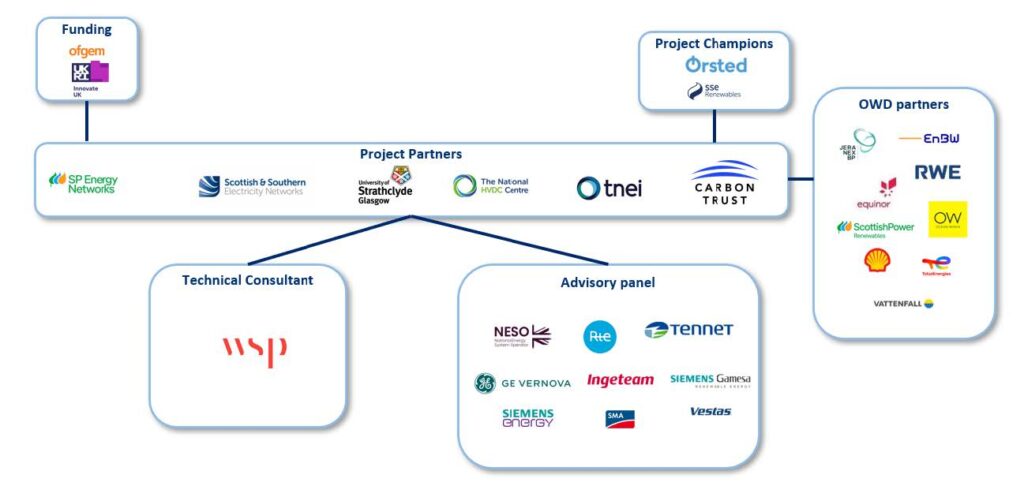
Figure 1: The consortium involved in the SIF BLADE project, which is made up of funders, project champions, project partners, technical consultants OWD partners and an advisory panel
Why does this matter?
A resilient electricity system depends on the ability to restore power quickly and safely following a major outage.
While offshore wind is now a key part of the generation mix, today’s restoration arrangements were largely developed around more traditional forms of generation. As the energy transition continues, understanding how renewable assets can contribute to future restoration strategies is becoming increasingly important.
The SIF BLADE project is helping industry partners explore what changes may be required to enable offshore wind to play a meaningful role in future restoration arrangements.
What have we learned so far?
Insights from the first stage of the Beta phase have highlighted some of the challenges associated with integrating offshore wind into existing restoration frameworks.
Analysis undertaken within the project indicates that current restoration requirements can significantly limit the ability of offshore wind farms to participate. Restoration generators must be able to provide a guaranteed level of power output for 10 hours for 80% of the year and due to variability in wind speed, offshore wind farms can’t do this. But this also prevents them from contributing when it is windy.
However, the SIF BLADE project has also demonstrated that offshore wind can technically contribute to restoring a de-energised network.
Supporting the future energy system
The SIF BLADE project brings together several areas of innovation that are central to TNEI’s work, including:
- Innovative and insightful power systems modelling
- Stability and control of renewables within weak grids
- Weather-driven interactions with energy systems
- Simulation and prediction of energy system risk
The project also builds on TNEI’s experience supporting electricity system restoration initiatives across the sector, helping clients navigate the challenges and opportunities created by an increasingly renewable energy landscape.
As the electricity network continues to transform, innovation projects like SIF BLADE play an important role in testing new ideas, challenging existing assumptions and helping the industry prepare for the future.
How can we help?
As a partner in the SIF BLADE project, TNEI is helping industry stakeholders explore innovative solutions to the challenges facing tomorrow’s energy system.
Whether you’re investigating network resilience, system restoration, renewable integration or emerging energy technologies, our specialists can help turn complex challenges into practical solutions.
Get in touch to discuss how TNEI can support your next project