News

Keep up to date with TNEI’s latest news and opinion pieces

Enhancing confidence in wind farm baseline sound assessments

How do you obtain representative background sound levels when operational turbines are already part of the sound environment? As the UK’s wind energy sector continues to grow, assessing new developments alongside existing wind farms is becoming increasingly common. Whether considering neighbouring projects, extensions or repowering schemes, one challenge continues to arise: how do you obtain representative background sound levels when operational turbines are already part of the sound environment? It’s a question that has become increasingly important as the industry looks to maximise renewable energy generation while maintaining robust and proportionate noise assessments. The challenge of measuring background sound near operational wind farms Background sound levels play a fundamental role in wind farm noise assessments, forming the basis of operational noise limits. In an ideal scenario, baseline measurements would reflect the acoustic environment without any significant contribution from operational wind turbines. However, where a proposed development is located near an

button

Seven insights shaping the future of power systems

As the energy transition accelerates, electricity networks are being asked to do more than ever before. They must accommodate growing volumes of renewable generation, support the electrification of heat and transport, remain resilient to increasingly extreme weather and maintain stability in a system with fewer traditional sources of inertia. At CIGRE 2026, TNEI presented six authored and co-authored papers and contributed to group discussions exploring these challenges from multiple perspectives, spanning transmission and distribution networks, system planning, network operation, climate resilience and future power system stability. Together, the papers provide a snapshot of some of the most important questions facing network owners, system operators, policymakers and more as they plan for the decades ahead: How do we understand the combined impact of multiple climate hazards? How can network operators best use future climate scenarios? How do we maintain stability in future low-inertia power systems? How will reactive power behaviour change

button

TNEI appointed to support South Africa’s largest planned single-phase solar project to date

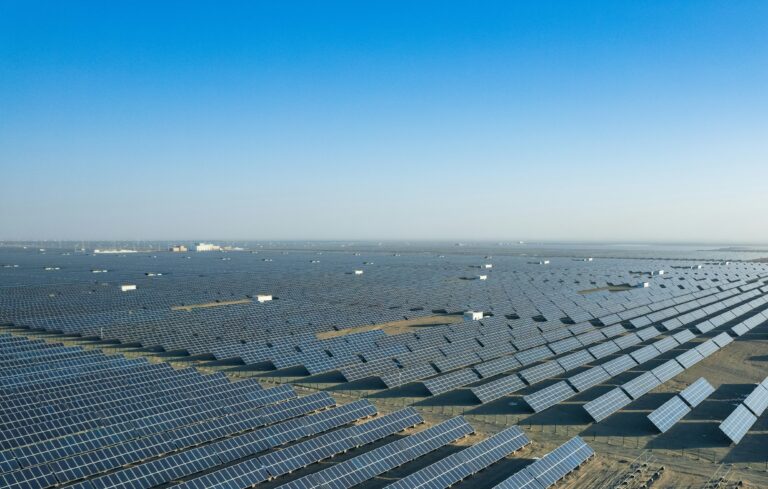
TNEI has been appointed by Northwest Electric Power Design Institute Co., Ltd. (NWEPDI) to provide grid code compliance services for the Notsi Solar PV Project, a landmark renewable energy development in South Africa. Located near Senekal in South Africa’s Free State Province, the Notsi Solar PV Project is expected to deliver 475 MWac of renewable generation capacity, making it the largest planned single-phase solar project in the country to date. The project is being developed by Anthem and constructed by the Northwest Electric Power Design Institute (NWEPDI), a subsidiary of the China Power Engineering Consulting Group. Once operational, the project will supply clean electricity to commercial and industrial customers through long-term wheeling agreements, with offtakers including Discovery Green and NOA Group. As part of its appointment, TNEI will be responsible for delivering a comprehensive programme of grid code compliance services, including: Compliance studies Power system modelling Grid code testing RMS

button

TNEI supports Zenobē’s landmark Kilmarnock South BESS as project becomes operational

We’re delighted to see Kilmarnock South Battery energy storage system (BESS) now operational. At 300 MW/600 MWh, the project represents a major milestone for the UK’s energy transition and we’re proud to have supported Zenobē throughout the planning and consenting process. As one of the UK’s largest battery storage projects, Kilmarnock South will play a vital role in strengthening the electricity network and enabling greater integration of renewable energy. Using advanced grid-forming inverter technology, the facility will provide critical grid stability services traditionally supplied by conventional fossil fuel power stations, helping to create a cleaner, more resilient and flexible energy system. The project’s impact is significant. By reducing renewable energy curtailment and supporting a more stable grid, Kilmarnock South is expected to prevent approximately 3.3 million tonnes of CO₂ emissions over its first 15 years of operation, making an important contribution to the UK’s net zero ambitions. Congratulations to the

button

IPSA becomes IPSA Energy Solutions Limited to support accelerated growth in new markets.

New company status will support the next phase of growth for one of the industry’s longest-established power systems software providers. IPSA will now be a separate, standalone company from TNEI Services Limited and officially be known as IPSA Energy Solutions Limited (IPSA). The company will continue to be wholly owned by TNEI Group. The change reflects the company’s evolving role in the energy sector and its ambitions for continued growth in new and emerging markets. IPSA will continue to deliver the power system analysis software, expertise and support trusted by the energy industry for more than 50 years. During this time IPSA has earned a reputation as a trusted partner, helping organisations design, plan and operate reliable and resilient electrical networks. Gorby George, Director, of IPSA Energy Solutions Ltd commented: “Becoming IPSA Energy Solutions Limited is a natural evolution that better represents our role within today’s energy sector while preserving

button

Can local energy balancing unlock stalled renewables? What we’re learning from GECCO

TNEI has been working with Regen, National Grid Electricity Distribution and Energy Local on the Geoprint for Energy Club Connections and Operations (GECCO) project, exploring whether local energy balancing, the coordination of local generation and demand within a defined area, could make better use of existing grid capacity, reduce pressure on the network, defer costly reinforcement and unlock new renewable connections sooner. A key learning so far is that local balancing is not just a theoretical concept. Previous schemes have shown it can reduce network pressure, enable both new generation and new demand to connect and create measurable financial value. However, not every local supply or market model is relevant for GECCO’s aims. The project has so far reviewed different emerging UK local energy models and grouped them into broad categories, concluding that these models play different roles depending on how directly they interact with the grid and whether they

button

To download the report, please enter your email address:

To view the videos please enter a valid email address: