News

Keep up to date with TNEI’s latest news and opinion pieces

Size matters. TNEI publish paper on how small data helps us understand the growing impact of electric vehicles on power networks

Ourpaper on electric vehicles, data and distribution network planningis now available to download. Big data and electric vehicles (EVs) are two hot topics in the energy sector in 2019 and this paper explores what one can tell us about the other. Download the full article here The increasing presence of electric vehicles on our electrical networks ““ both in future projections and those already on the road ““ is certainly a hot topic for the energy sector. But it poses a challenge for networks, especially low voltage (LV) networks, as they might struggle to meet the power demands from more electric vehicle customers. It is therefore essential that distribution network operators (DNOs) are able to predict where and when EVs are likely to appear, in what quantities, and understand their aggregated demand. This type of modelling and forecasting can require a substantial amount of data – more than is currently


button

RIIO 2 WPD Stakeholder Workshop

In December 2018, Ofgem published a consultation document on the RIIO-2 Sector Specific Methodology for gas transmission and distribution and electricity transmission. The RIIO (Revenues + Incentives + Innovation = Outputs) framework is used to set price controls and dictates the allowed revenues for the gas and electricity networks in Great Britain. RIIO-T1 is coming to an end in 2021 and Ofgem are now considering how to implement phase two, which will last for 5 years; what should be retained from the original price control and what needs to change? One of the proposed changes is to consolidate the six output categories introduced used in RIIO-1 into three overarching outcomes. In the RIIO-2 framework decision Ofgem stated that the outputs would be specified as a set of consumer facing outcomes that they expect companies to deliver: Deliver a high quality and reliable service to all network users and consumers; Deliver

button

Consultation on the energy storage planning process

The Department for Business, Energy and Industrial Strategy (BEIS) has released a consultation asking stakeholders for their views on the Nationally Significant Infrastructure Projects (NSIP) threshold. In particular, whether to remove the 50 MW NSIP threshold to standalone storage schemes and amend the Planning Act 2008 so that a new capacity threshold for schemes that include co-located storage, regardless of size, is established. These changes would enable storage projects, regardless of capacity to be put to local authorities for approval without needing to go through the NSIP process. Furthermore, network users could be encouraged to investigate co-location with energy storage, as the proposal indicates that the site would only fall under the NSIP regime if either the capacity of storage within a co-located scheme or the generating capacity excluding any storage is more than 50 MW. This would remove some barriers to market entry for large storage projects as the

button

EREC P28 Issue 2 – What has changed from Issue 1 and what are the impacts for those connecting disturbing equipment that causes voltage fluctuation?

Engineering recommendation (EREC) P28 issue 2 was published by the Energy Networks Association (ENA) in 2018 and it became applicable on the 23rd May 2019. The latest versions of the Distribution Code and the Grid Code have also been updated accordingly, and refer to P28 issue 2. The previous version of this EREC was published 30 years ago to provide recommended planning limits for voltage fluctuations for connection of equipment to public electricity supply systems in the UK. Since then the factors affecting the distribution and transmission systems as well as the equipment connecting to them have changed. The move towards distributed generation and low carbon technologies using this modern equipment has the potential to cause flicker. The revision of EREC P28 considers these changes and provides updated voltage fluctuation limits. If you propose to connect equipment which has the potential to cause voltage fluctuation or carry out assessments concerning

button

TNEI, National Grid ESO and SP Energy Networks awarded 10 million pounds for Black Start innovation project

A globally ground-breaking £11.7 million project, which will look to prove whether distributed energy resources can restart the restoration of electricity supplies, has been given the go ahead by energy regulator Ofgem. The partnership project between National Grid Electricity System Operator (ESO), SP Energy Networks and TNEI, will explore how distributed generation can be put to use to get the grid up and running should a “‘Black Start’ event occur. Black Start is the procedure used to restore power in the highly unlikely event of a total or partial shutdown of the National Electricity Transmission System. Traditionally, large power stations would have been used to restore the system. However, as the UK moves to cleaner, greener energy generation, the changes in generation mean that new options must be developed. The enormous growth in Distributed Energy Resources (DER) presents an opportunity to develop a radically different approach to Black Start. However,

button

Constrained Renewables and Green Hydrogen Study – Read our Findings

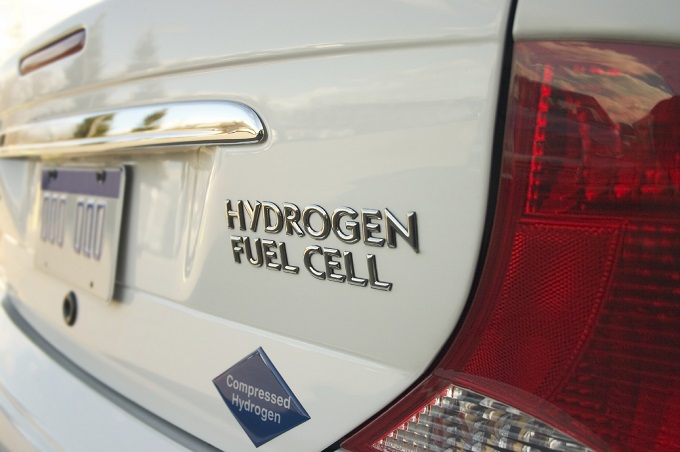
Yesterday, Scottish Enterprise published the results of a study examining the nature of grid constraints and onshore wind curtailment in Scotland, and investigating whether the production of green hydrogen via electrolysis could represent a cost-effective approach to mitigating this issue. The work was undertaken by TNEI in partnership with Pure Energy Centre and will feed into Scottish Enterprise’s strategic approach to the Hydrogen sector over the coming years. You can read the full report here. Hydrogen is a key area of focus for the Scottish EnterpriseEnergy Team at the moment, and the Constrained Renewables andGreen Hydrogen study was commissioned in part to help inform Scottish Enterprise’s strategic approach to the potential emergence of a hydrogen economy in Scotland.

button

To download the report, please enter your email address:

To view the videos please enter a valid email address: