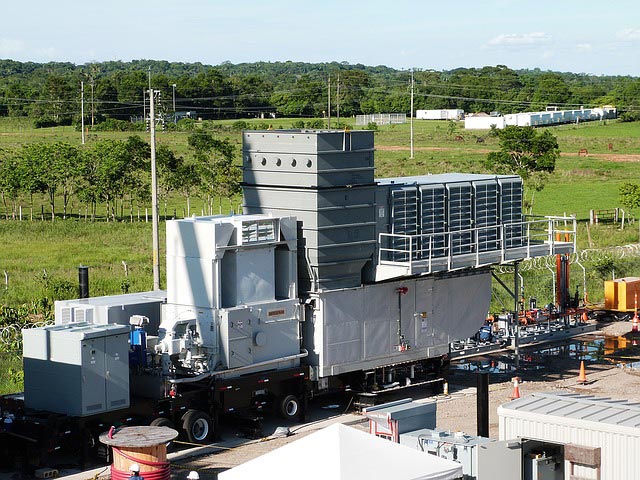
Defra’s consultation on the implementation of the EU’s Medium Combustion Plant Directive (MCPD) in England and Wales closed on 8th February 2017. The Scottish Government ran a parallel consultation process until 10th March with new legislation transposing the directive having to be in place across the UK by 19th December 2017. There will be a phased introduction with installations with a thermal input of over 5MW needing to be registered by 2025 and those less than 5MW benefiting from an extended deadline of 2030.
The Directive is aimed at improving air quality and fills the gap in coverage of the Industrial Emissions Directive by stipulating regulation of plant with a thermal input of between 1 and 50MW. Currently plants of less than 20MW thermal input are not covered by the Environmental Permitting Regulations in England and Wales or the Pollution Prevention and Control Regulations in Scotland.
Under the Directive, all plant within the thermal input range will need to be registered with the competent authority, comply with emissions limits for certain pollutants (oxides of nitrogen (NOx), sulphur dioxide (SO2) and total particulate matter (dust)) and to monitor those emissions. Monitoring methodology is to be agreed with MCERTS likely to be seen as disproportionate for smaller plants where there is only a requirement to monitor NOx and carbon monoxide emissions.
In the UK, the most immediate impact has already been seen in the reduction in the number of proposed diesel powered peaking plants. The incoming legislation will provide a means to stem their growth and reduce the impacts on air quality resulting from the development of that technology as a response to the need to balance the electricity network.
The proposals set out a five minute abatement limit whereby the use of Selective Catalytic Reduction to reduce NOx emissions would need to achieve the limits within five minutes of operation. This prevents intermittent diesel generation from relying on that form of abatement as the catalyst may not reach temperatures required to be effective quickly enough.
The consultation documents sought opinions on who the regulator should be. In England and Wales, options are presented as to whether that should be the Environment Agency , Natural Resources Wales or the Local Authority and whether responsibility should be split depending on the likely impacts on air quality. The Scottish Government is clear that it believes that the responsibility should fall to SEPA. In any case, the requirements are set to add additional burdens where resources are already constrained and there is potential for lengthy delays.
So for developers of this scale of combustion plant an additional level of regulation is being added that will add both cost and time to the development process and further operational costs through fees, charges and monitoring requirements. Requirements need to be considered early in the development process so that, as far as possible, survey and assessment effort can be optimised and designs can be refined with both land use planning and permitting processes in mind.