The results of the Enhanced Frequency Response (EFR) Tender were released on 26th August. This was the first procurement round for a new, faster service to manage the grid frequency (see our introductorypost).The results are big news, because energy storage providers have topped the list, and these contracts will lead to the first major commercial deployments for grid-scale battery storage in Great Britain.
Who are the winners?
National Grid procured a full 201MW, split between seven energy storage providers. This was the maximum volume that National Grid required in this round, and their procurement of this total proves that battery storage is now competitive with traditional methods of managing frequency. Other technologies, such as flexible generation and demand aggregation, also participated in the auction, but none were able to compete with energy storage.
The winning tenders were:
EDF Energy “ 49MW
Vattenfall Wind Power “ 22MW
Low Carbon “ 10MW and 40MW
E.ON UK CHP “ 19MW
Element Power “ 25MW
RES “ 35MW
Belectric “ 10MW

EFR tenderwinning sites whose location has been publicly released
Distribution Network Operators (DNOs) in the south of England have experienced the biggest rush for storage grid connections. Indeed, sites in Kent and Essex are represented among the winners, but successful sites are spread across England and Wales, including Sheffield, Cumbria and South Wales. Many share a location with large generators, including EDF’s West Burton Coal Power Station, Vattenfall’s Pen Y Cymoedd wind farm, and E.ON’s Blackburn Meadows Biomass CHP plant. Co-locating with generation can, in some cases, offer significant cost savings against a new stand-alone site.
What will it cost?
Prices were lower than expected by many in the industry, with the winning tenders all costing less than £12 per MW per hour of service (the median bid price was approximately £20 per MW per hour of service). Assuming that the winning projects are deliverable at these prices, this indicates that the storage industry can facilitate system flexibility at very competitive rates. Sixty-four storage projects entered the auction and only seven were awarded contracts, so there will be many disappointed developers looking for their next move.
EFR is the first major commercial service to be provided by storage. EFR is attractive because its advanced technical requirements are a good match for battery storage and because it offers certainty of revenue in the form of a fixed, four year contract. However, storage could soon be used for many other services, including grid constraint management, reinforcement deferral, arbitrage, fast frequency response, voltage support and phase balancing. Following the success of this tender process, Ofgem and BEIS need to urgently resolve the regulatory uncertainties that hang over the storage industry: the legal definition of storage, network charging, revenue streams from DNOs, and metering arrangements when co-locating with ROC or CfD accredited renewable generators.
What type of service won out?
Most companies will provide EFR 24/7, all year round, except for Low Carbon who has opted to exclude potential “triad” periods, the peak load times when network demand charges fall. Many bidders proposed price options both with and without triad periods, with some targeting a revenue stream whereby distribution-connected storage can help suppliers avoid network charges. As discussed inour recent blog post, a major review has begun into the future of network charging, and this uncertainty led six companies to withdraw tendered options that used this revenue stream.
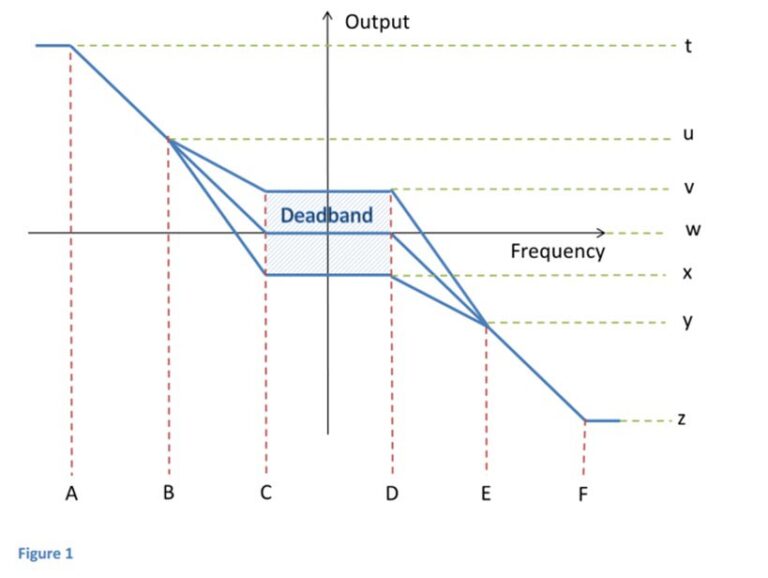
All the winning bidders will provide “Service 2″ which is the most valuable and technically challenging EFR option. Compared with Service 1, Service 2 has a smaller “deadband”, within which the storage facility can freely charge and discharge.

From National Grid’s EFR invitation to tender report.
The full results of the tender can be found onNational Grid’s Enhanced Frequency Response page.
To find out how TNEI can help make your energy storage projects go without a hitch, please visit our energy storage page or email info@tneigroup.com.